
What Attic Insulation Thickness Do You Need in Ireland? (2026 Guide)
Introduction
If you’re thinking about upgrading your attic insulation in Dublin, one of the most common questions is: how much insulation do you actually need?
In Ireland, the answer is quite clear – 300mm attic insulation is the standard, but many homes still fall well below this recommendation. Older properties, particularly across Dublin and surrounding areas, often have insufficient insulation levels, leading to unnecessary heat loss and higher energy bills.
In this guide, we’ll explain the recommended attic insulation thickness in Ireland, why it matters, and how to check whether your home meets current standards. Whether you’re planning an upgrade or applying for an SEAI grant, understanding insulation thickness is a key first step.
What Is the Recommended Attic Insulation Thickness in Ireland?
The recommended attic insulation thickness in Ireland is typically 300mm, which meets current building regulations and provides effective thermal performance for most homes.
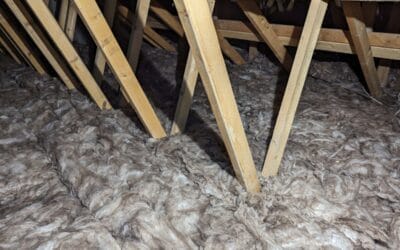
300mm of mineral wool insulation
This guideline is set in line with SEAI (Sustainable Energy Authority of Ireland) recommendations and modern building regulations.
This level of insulation helps achieve the necessary thermal performance (U-values) to significantly reduce heat loss through your roof – which is one of the biggest sources of energy inefficiency in Irish homes.
Typically, this 300mm thickness is installed in two layers:
One layer between the attic joists
A second layer laid across the joists
This method ensures full coverage and reduces heat escaping through structural timber (known as thermal bridging).
Why 300mm Is the Recommended Attic Insulation Thickness
Having the correct attic insulation thickness in Dublin homes isn’t just about compliance — it has a direct impact on your home’s heating performance.
With approximately 300mm of attic insulation, you can:
Lower your annual heating bills
Improve your Building Energy Rating (BER)
Maintain more consistent indoor temperatures
Reduce strain on your heating system
For many homeowners, upgrading insulation to this level is one of the quickest ways to improve energy efficiency and can significantly reduce heating costs.
What Happens If Your Attic Insulation Is Below 300mm?
If your attic insulation is below the recommended level, your home will lose heat much more quickly.
Common issues include:
Higher heating costs
Rooms that cool down quickly after heating
Cold ceilings and draughts
Uneven temperatures throughout the house
Increased workload on your boiler or heat pump
In practical terms, thinner insulation simply doesn’t provide enough resistance to heat loss — meaning you’re paying more to maintain comfort. Find out how much you can save with proper attic insulation in Ireland.
How Thick Is Insulation in Older Irish Homes?
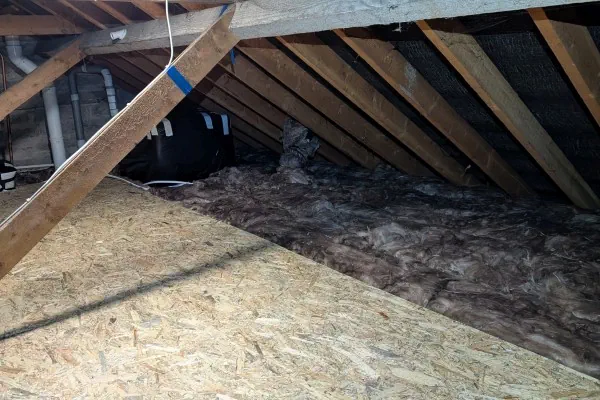
Many Dublin homes, particularly those built before modern regulations, are under-insulated.
Typical insulation levels found include:
0–100mm in older or untouched attics
100–150mm in homes insulated 10–20 years ago
Insulation that has settled or become compressed over time
Even if your attic was insulated in the past, it may no longer meet today’s standards. If your insulation is significantly below recommended levels, it may not just need topping up — there are clear signs your attic insulation needs replacing that should be checked first.
This is especially common in older Dublin housing stock, where insulation upgrades were not always carried out to modern specifications.
Can You Add Insulation on Top of Existing Material?
In most cases, yes — additional insulation can be installed on top of existing insulation.
This is often the most cost-effective approach.
However, it depends on the condition of the existing material:
Suitable for topping up:
Dry insulation
Evenly distributed insulation
No signs of damage or contamination
May require removal:
Damp or mouldy insulation
Compressed or degraded material
Insulation obstructing ventilation
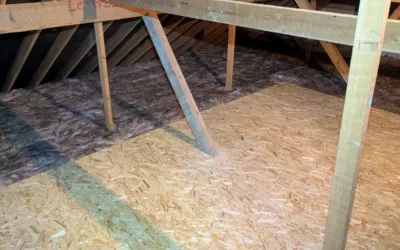
In many cases, upgrading insulation also requires adjustments to attic flooring to avoid compression and maintain performance. A professional assessment will determine the best approach for your attic.
Does Attic Flooring Affect Attic Insulation Thickness?
Yes — and this is one of the most common mistakes Dublin homeowners make.
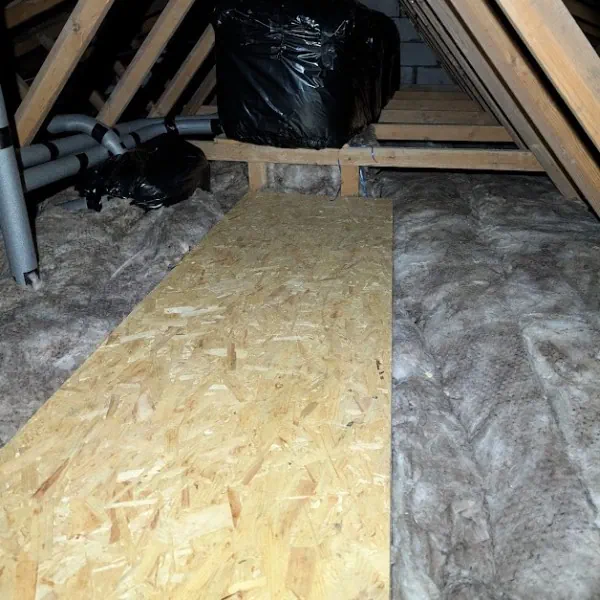
Standard attic flooring boards laid directly on top of insulation can compress the material, reducing its thickness and effectiveness.
Even small reductions in depth can significantly impact performance.
Best practice:
Maintain full 300mm insulation depth
Install walkways instead of full boarding where appropriate
This allows you to gain storage space without compromising energy efficiency.
What Type of Insulation Is Typically Used?
The most common material used in Irish attics is mineral wool insulation (such as Earthwool).
It is widely used because it:
Provides excellent thermal performance
Is breathable and moisture-resistant
Is non-combustible (fire safe)
Is well-suited to Irish climate conditions
Other materials exist, but mineral wool remains the standard for most attic insulation projects.
What Thickness Do You Need to Qualify for SEAI Grants?
To qualify for SEAI attic insulation grants in Ireland, your insulation must meet current performance standards — which typically means reaching the 300mm attic insulation thickness level.
It must also be:
Properly installed
Free from gaps
Not compressed
If your insulation does not meet these criteria, it may not qualify for grant support.
How to Check Your Current Attic Insulation Thickness
You can carry out a simple check yourself:
- Safely access your attic
- Look at the insulation between the joists
- Measure the depth using a tape measure
Quick guide:
Less than 150mm → likely needs upgrading
Around 200mm → below current standard
300mm → meets modern recommendations
Also check for:
Uneven coverage
Compressed areas
Exposed joists
If you’re unsure, a professional inspection can give you a clear answer quickly.
Is More Than 300mm Ever Needed?
For most Irish homes, 300mm is considered optimal.
Adding more insulation beyond this point generally results in diminishing returns — meaning the additional benefit becomes minimal compared to the cost.
Instead of increasing thickness beyond 300mm, it’s more important to ensure:
Proper installation
Full coverage
No compression
Adequate ventilation
Quality installation matters more than excessive thickness.
Attic Insulation Thickness Comparison
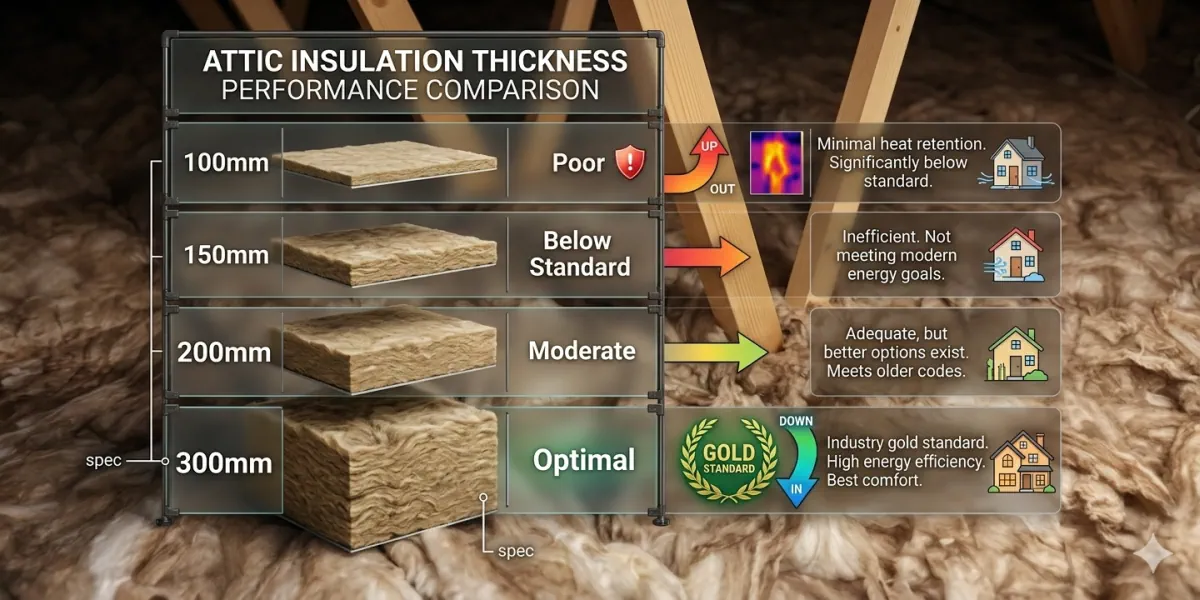
| Insulation Thickness | Performance Rating | Efficiency Description |
| 0-100mm | Poor | Significant heat loss; well below modern building standards. |
| 100-150mm | Below Standard | Minimal protection; common in older homes but inefficient. |
| 200mm | Moderate | Moderate level of heat loss protection |
| 300mm | Optimal | Optimal SEAI standard for energy efficiency and heat retention. |
Frequently Asked Questions
Is 200mm of attic insulation enough?
No — while it provides some benefit, it falls below current recommended standards in Ireland.
Can insulation be too thick?
Beyond 300mm, additional insulation provides limited extra benefit in most cases.
Does attic insulation settle over time?
Yes — older insulation can compress or settle, reducing effectiveness.
Should I remove old insulation first?
Not always — it depends on its condition. Many attics can be topped up instead.
What is the best insulation for Irish homes?
Mineral wool insulation is the most commonly used and suitable option.
Conclusion
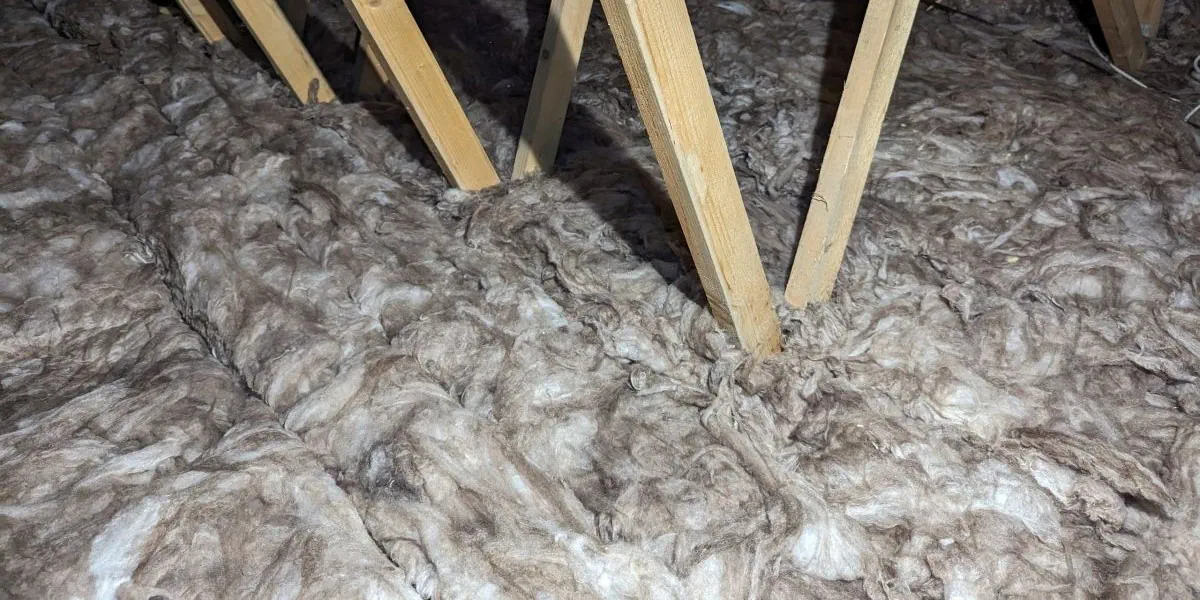
For homes in Ireland, the recommended attic insulation thickness is approximately 300mm.
Many properties — particularly older homes in Dublin and surrounding areas — fall well below this standard, leading to unnecessary heat loss and higher energy bills.
Upgrade your attic insulation in Dublin to the correct thickness to improve comfort, efficiency, and long-term energy costs.
If you’re unsure about your current insulation levels, book a professional attic insulation assessment to quickly identify what your home needs — and help ensure your upgrade meets SEAI standards.

About Keane Insulation And Solar
Keane Insulation and Solar helps Dublin homeowners reduce energy bills and improve comfort with SEAI-approved attic insulation, raised attic flooring, and modern solar energy solutions. We combine trusted expertise with sustainable upgrades for smarter homes.
0 Comments